
Why the Shaving Bowl Was Once the Centerpiece of the Sink
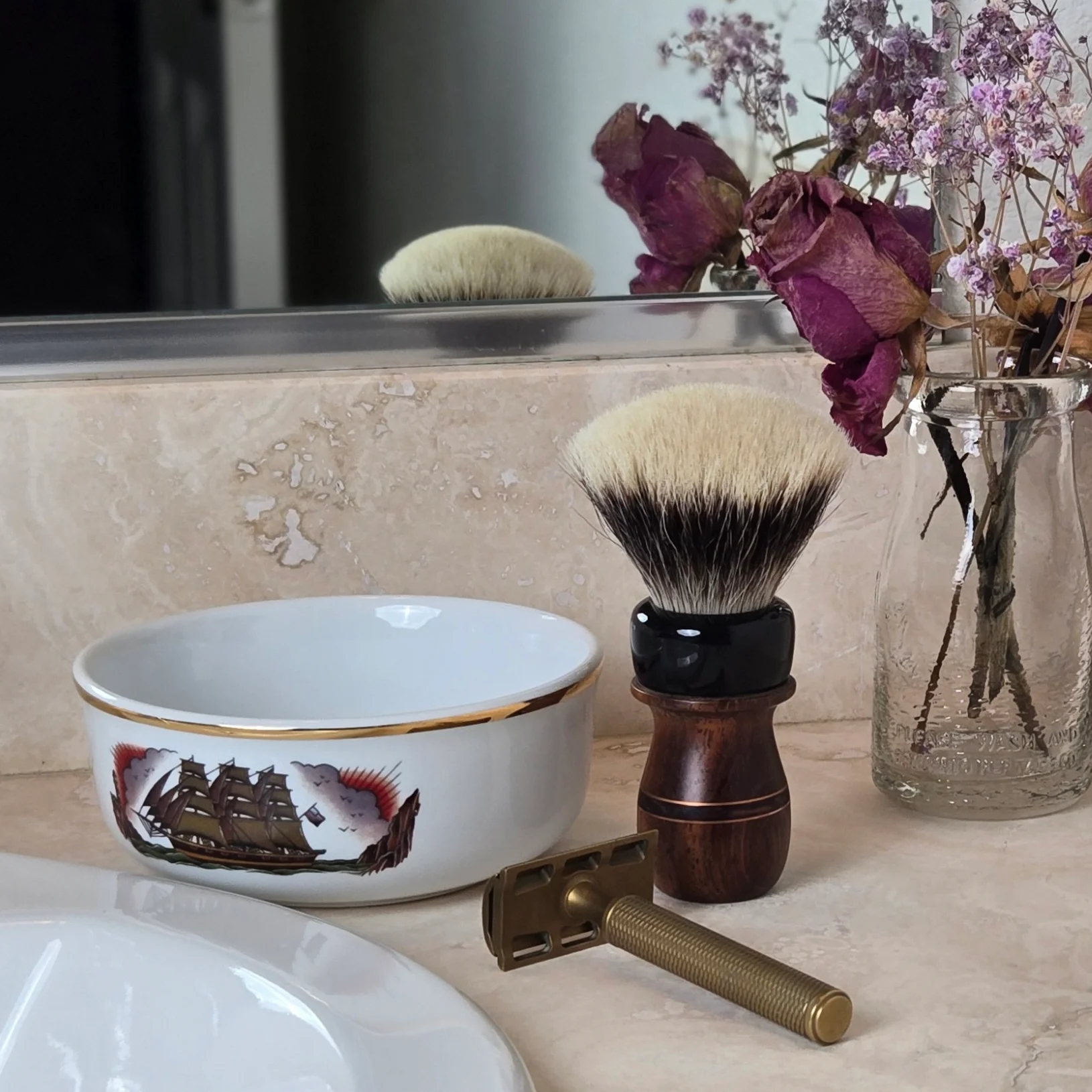
Strictly speaking, most men didn’t use what we’d call a shaving bowl in the late nineteenth and early twentieth centuries. They used shaving mugs. These were vessels with purpose and familiarity. But whether it was called a mug, a scuttle, or something else entirely, the object that held water and soap occupied a place of attention in the daily routine. It was visible, tactile, and unashamedly present.
For generations, the act of wet shaving began long before the blade ever touched skin. Warm water, a brush, and a soap puck were cornerstones of the process, and the vessel that helped bring that lather to life was right there on the counter. The shaving mug wasn’t hidden in a drawer. It was seen, held, and used as part of an intentional routine.
Ritual Before Convenience
Hard shaving soaps, dense pucks meant to be whipped into a rich, protective lather, have existed in recognizable form since at least the early nineteenth century. These soaps weren’t like modern canned foams. They needed work. Water, brush, and motion were how lather happened.
A shaving mug or scuttle would often hold hot water to warm the brush, which in turn helped soften the soap and coax a thick, cushioning lather. This wasn’t a mere utilitarian step. It was part of the rhythm of preparation, a deliberate pause before the shave itself.
As the safety razor emerged in the early twentieth century, pioneered by innovations like Gillette’s design that paired a razor with disposable blades, home shaving became more accessible. Yet the grooming ritual still depended on tools that required engagement. Soap, brush, vessel, blade.
The Shift from Making to Dispensing
Mid-century shaving looked very different. The rise of canned shaving creams in the 1940s and 1950s brought a new kind of ease, a press-and-apply formula that didn’t require the manual building of lather. Creams and gels, along with cartridge razors promising quick results, shifted shaving toward speed and convenience.
In that transition, the mug, the visible tool of a longer, more tactile process, slowly retreated from the sink. It wasn’t that shaving mugs or their descendants were no longer appreciated. They simply became less necessary in a world that prioritized efficiency over experience.
The Return of the Ritual
In the early 2000s, something curious began to happen. A resurgence of interest in traditional wet shaving. Enthusiasts rediscovered not just single-blade safety razors and straight razors, but the full sensory experience of lathering with soap and brush. Old ways were not replicated as museum pieces. They were relearned as meaningful practice. Traditional shaving soaps saw a renaissance, and with them came a renewed place for the bowl or vessel that makes rich lather possible again.
This wasn’t nostalgia for nostalgia’s sake. It was a rediscovery of process. A willingness to slow down and engage with a daily routine in a way that feels deliberate rather than transactional.
Kept Within Reach
What’s remarkable about this revival isn’t only that tools have returned. It’s that they’ve returned with intention. The shaving vessel once again claims its place on the counter, not as décor, but as a companion to practice. It stands where it’s seen, touched, and used, a reminder that some parts of a ritual are worth reclaiming.
And if it’s a bowl rather than a mug, that’s a detail of form rather than function. The reason these vessels were once central wasn’t what they were called. It was that they mattered.
Final Thought
Objects reveal what we value. When a tool that shapes rhythm, attention, and experience lives in sight and hand, it says something about how we choose to live. The shaving vessel, mug, scuttle, or bowl, was once part of a man’s morning not because it had to be, but because it helped him be there. Today, its return reflects more than a trend. It reflects a decision to care about how we begin the day.