
From Illustration to Porcelain
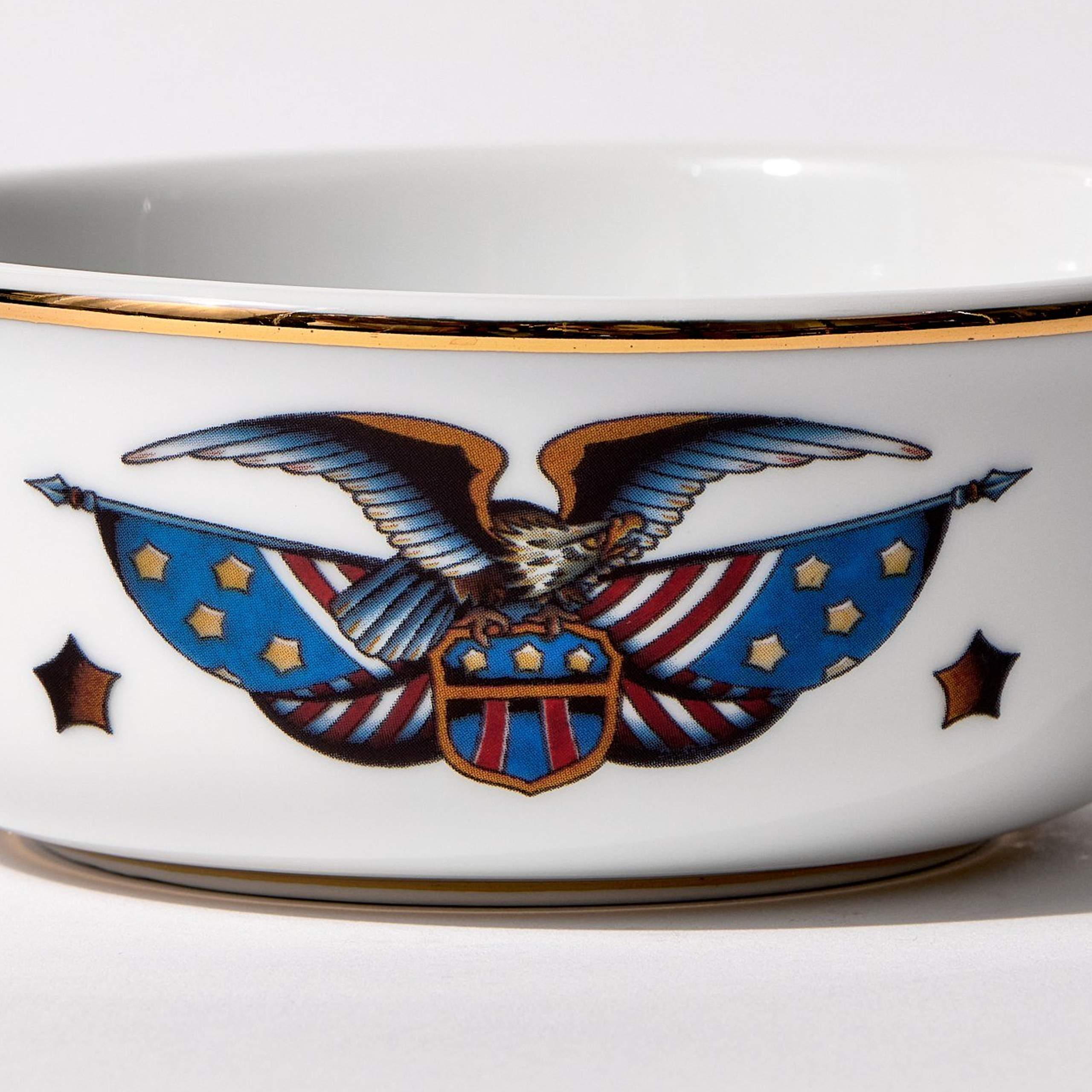
Finding the right artwork for the Brousseau & Dov shaving bowls was an important step, but it wasn’t the end of the work. In many ways, it was the beginning of a different kind of problem entirely.
Artwork on paper lives in a forgiving world. Porcelain does not. Porcelain is a material with its own rules. Lines soften during firing. Colors behave differently than expected. Scale and curvature change how an image reads once it’s no longer flat. What feels balanced on paper does not automatically feel balanced once it’s been transferred onto a curved, glazed form that’s meant to be handled and used every day.
That gap between paper and porcelain was where a lot of the work lived.
Learning through limits
Translating the artwork wasn’t a matter of applying it wholesale. It required slowing down and learning what both the material and the artwork would allow. In many cases, that meant discovering constraints only after encountering them.
Some challenges were obvious. Others only revealed themselves through testing and iteration. Certain ideas worked immediately. Others needed to be simplified. A few had to be abandoned altogether.
This wasn’t about finding clever solutions. It was about learning where care was needed and where restraint mattered more than persistence. Each adjustment was a response to something real, not theoretical.
Preserving character, not every detail
The goal was never to preserve every detail of the original illustrations. Fidelity, in this context, meant something else entirely.
What mattered was preserving the character of the artwork: its balance, its restraint, and its hand-drawn quality. That meant making decisions that honored the spirit of the original work while allowing it to belong naturally to porcelain as a material.
In practice, this required judgment, patience, and acceptance. There were moments where “good enough” wasn’t a compromise, but a responsible decision. Continuing to chase an abstract ideal would have delayed the work indefinitely without meaningfully improving the final result.
Shipping something honest and thoughtfully made mattered more.
Artwork that belongs to the object
The result isn’t artwork applied as decoration. It’s artwork that has been translated into the material itself, shaped by the constraints and possibilities of porcelain.
This distinction matters. Decoration can be added late in the process. Translation has to be considered from the beginning. It requires respect for both the artwork and the object it’s becoming part of.
When you see a finished Brousseau & Dov bowl, the artwork isn’t meant to announce itself. It’s meant to feel familiar, intentionally understated, and at home on the bowl. Something that reveals itself over time rather than demanding attention all at once.
Where the work settled
This process took longer than expected, and it asked for more patience than I initially anticipated. But it also clarified what kind of work I wanted to put into these bowls.
I wasn’t interested in speed, novelty, or surface-level effect. I was interested in creating something that could be used daily and still feel right years from now. Something that rewarded familiarity rather than spectacle.
That standard guided every decision along the way, including the ones that required letting go.