
Why Some Shaving Bowls Feel Awkward in the Hand
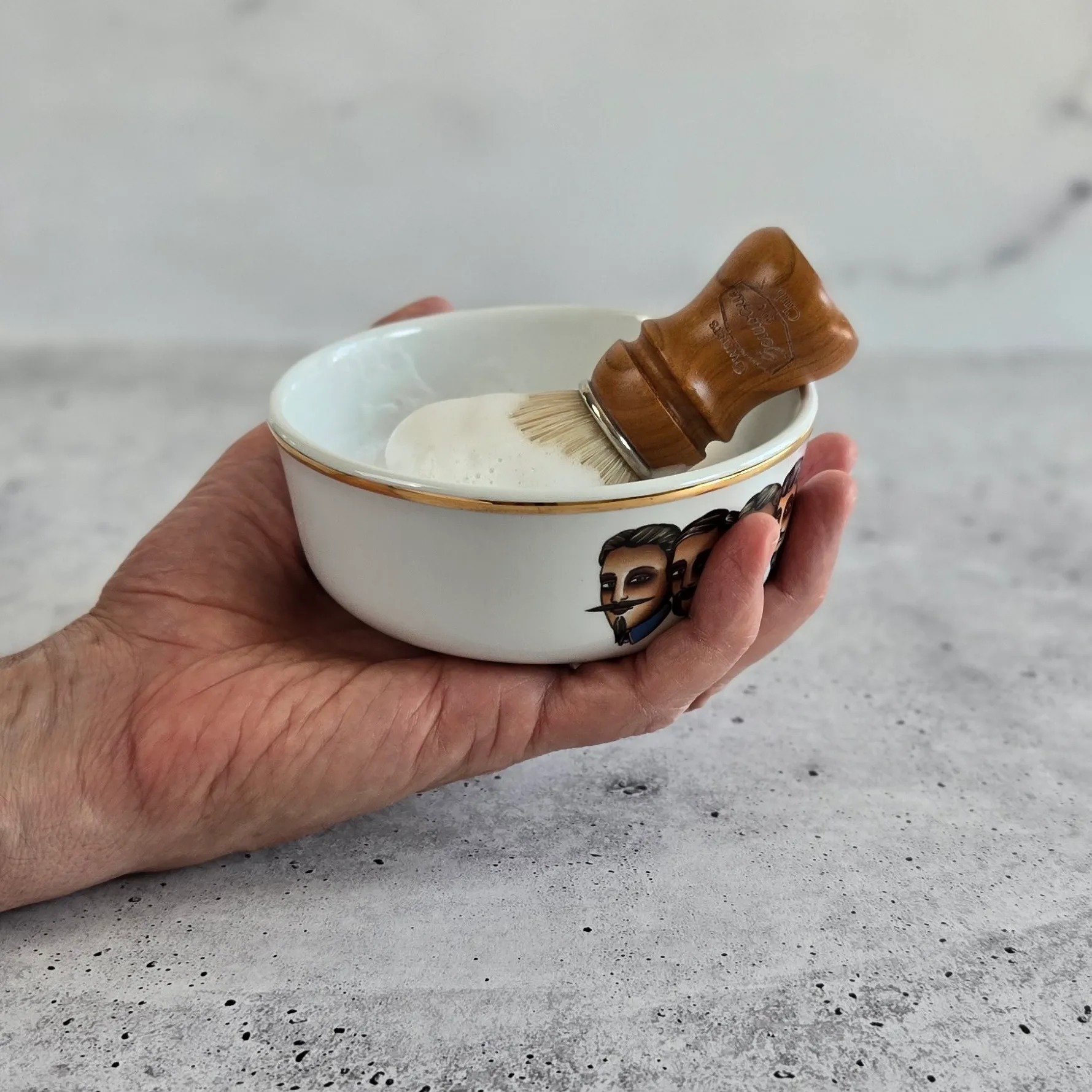
Many shaving bowls are judged by how they look sitting on a counter. Their color, finish, texture, or interior pattern usually receives the most attention. But once the lathering begins, another quality starts to matter just as much: how the bowl actually feels in the hand.
Some bowls feel comfortable almost immediately. Others never quite settle into place. You adjust your grip repeatedly. Your fingers search for stability. The bowl rotates slightly depending on its shape, or when its wet. Nothing is necessarily wrong, but the bowl never feels or fits quite right. At that point, it typical becomes a display piece or stored in cabinet somewhere.
Over time, I began noticing that the shaving bowls I enjoyed most often shared something in common. They felt balanced, secure, and intuitive in the hand within the first few shaves. That experience is more difficult to design than it may first appear.
A shaving bowl is a uniquely tactile and personal item. Unlike a coffee mug or a serving bowl, it’s frequently handled with wet fingers. The bowl is lifted, rotated, rinsed, and repositioned throughout the shave. Small differences in proportion or surface finish can affect comfort and control.
One common solution is the addition of a handle. Handles can work well, particularly for users who prefer a fixed grip or larger bowls. But they also introduce tradeoffs. Unlike a mug, which is typically held in one orientation, a shaving bowl often benefits from freedom of movement. A handle fixes the hand into a more specific position, and that position may feel natural for some users while awkward for others. The thickness of the handle, the opening size, its angle, and even where it joins the body all influence comfort. In ceramic materials, handles introduce another consideration: vulnerability. Any attached feature becomes a potential stress point during use, cleaning, storage, or accidental impact. The more a feature projects outward from the body of the piece, the more exposed it becomes.
Other shaving bowls attempt to improve grip through thumb rests, finger grooves, or raised features. These can be effective, but they introduce similar challenges. The more a bowl dictates hand placement, the more dependent the experience becomes on individual anatomy and personal preference. A thumb rest positioned perfectly for one user may feel misplaced to another. Finger grooves sized for larger hands may feel unnatural to smaller ones. Even the preferred orientation of the bowl can vary from person to person depending on grip style, brush movement, or whether a person uses a bowl for loading or lathering. In many cases, the most versatile forms are not the most prescriptive ones.
Surface finish also plays a surprisingly role. Interestingly, some high-gloss glazes can feel more secure in wet hands than matte glazes. While matte surfaces often appear more tactile visually, certain gloss glazes develop a subtle sense of adhesion or grip during use that can make the bowl feel more stable while lathering. These are subtle differences, but they shape the overall experience more than many users realize.
Good shaving bowl design is often less about adding features and more about balancing competing priorities carefully enough that the bowl feels natural during use. Stability without excessive weight, comfort without forcing a specific grip, security without added features, and elegance without fragility.
The best shaving bowls rarely call attention to themselves while being used. The hand and grip feel natural and confident. The bowl becomes an extension of the process rather than something requiring constant adjustment. This kind of simplicity is difficult to achieve, and in many ways, it is the result of restraint.
And like most well-designed tools, it often feels obvious only after it has been done well.