
Why Size and Proportion Matter
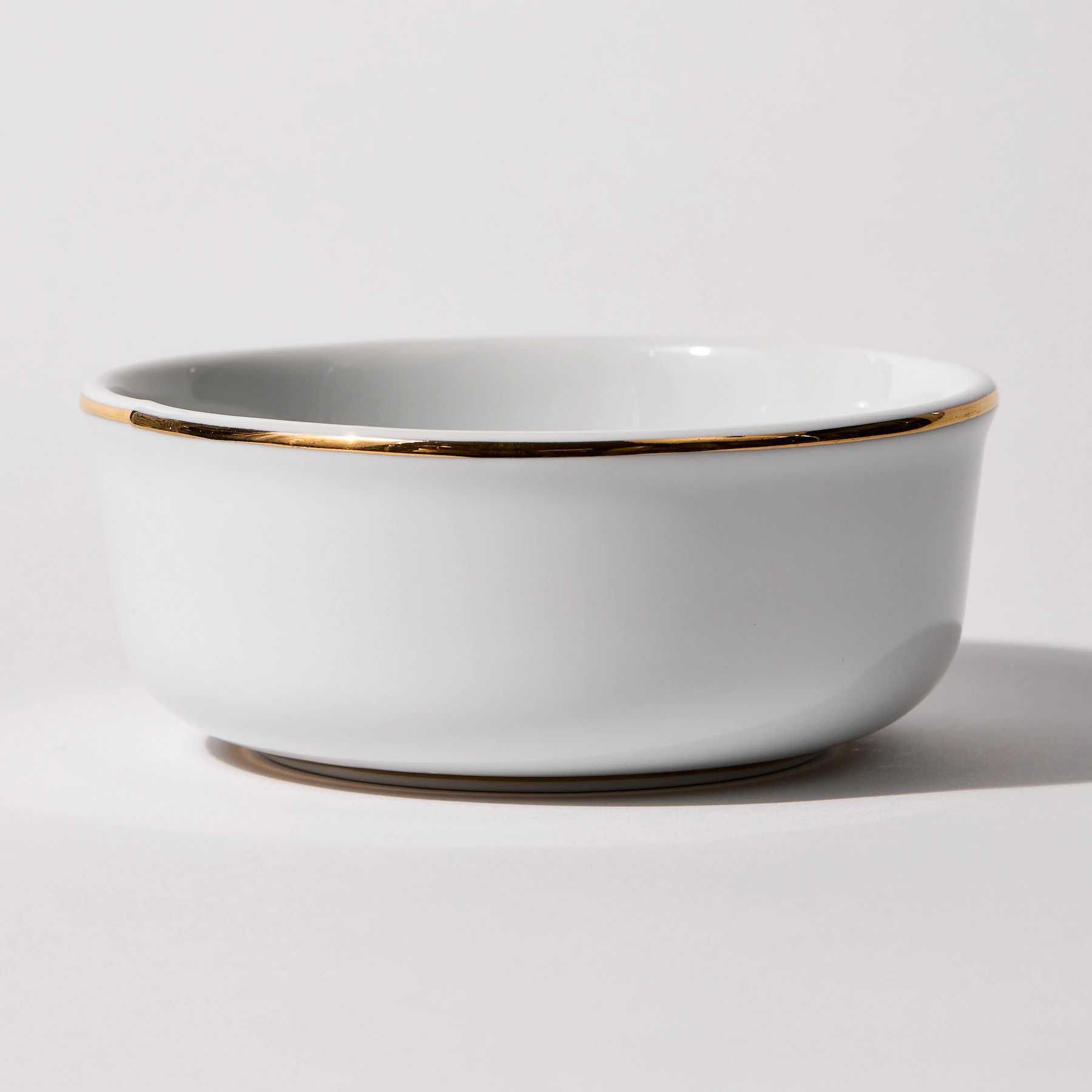
When I began developing our shaving bowl, I assumed the answer would be inside it.
Specifically, I assumed the interior lather feature would determine performance. That seemed to be the prevailing logic. Many modern bowls use prominent ridges, heavy texture, or deep contours meant to accelerate aeration. The more pronounced the feature, the more serious the performance appeared.
I followed that instinct at first, or at least I understood it, but I never pursued it. I wanted the bowl to feel elegant and composed. An aggressive interior would have worked against that. The more pronounced the feature, the less balanced the bowl would look.
So, I began testing. Not just readily available shaving bowls and prototypes, but bowls out of the kitchen as well. Mixing bowls. Soup bowls. Anything that could teach me something about motion in a contained space. I lathered in wide bowls, deep bowls, bowls that looked impressive, and bowls that barely looked intentional at all.
And slowly, something became clear.
Geometry Makes the Difference
Adjusting diameter and draft altered performance more than any interior texture I had encountered.
When the bowl became too wide, lather behaved like eggs in an oversized mixing bowl. When beating eggs, you want the mixture to gather so each stroke folds it back into itself. Instead of gathering under the fork, they spread thinly across the surface. Each stroke pushed the lather outward rather than folding it back on itself. I found myself chasing the suds around the perimeter of the bowl. The brush worked hard, but the mixture didn’t cooperate. The motion felt scattered and the energy dispersed instead of concentrating.
Something different happened in a smaller space.
As the diameter narrowed, the lather stopped escaping outward and began working within itself. The motion stayed concentrated. The soap and water remained engaged with the knot. Aeration improved, not because the interior was aggressive, but because the working area was contained. The bowl wasn’t forcing performance; it was allowing it.
That realization shifted everything.
If geometry was doing most of the work, then texture didn’t need to dominate. It only needed to assist. This mattered more than I expected.
Aggressive lather features are popular for a reason. They are visible. They signal performance. And to be fair, they do help. They splay the knot. They introduce friction. They accelerate development. But they also introduce trade-offs. Some shavers worry about wear and tear on their natural hair brushes. Whether that concern is measurable or not, it exists. More pronounced features can also trap partially developed soap, complicating cleanup and wasting product.
If proportion is correct, the feature can be restrained, understated, and still effective. That became the guiding principle.
From there, I began noticing other things I had previously overlooked.
Lather is mostly water. It will follow the path of least resistance. When the side-wall angles outward too aggressively—this is the draft—the interior becomes a slide. During vigorous brush movement, lather spills over the edge. It looks dramatic, and is enjoyable for some shavers, but it slows development and creates waste.
The obvious solution is to make the wall taller. But increasing the height adds weight, reduces comfort in the hand, and increases the chance of brush-to-bowl contact. Every solution introduces another compromise, and once again, the answer returned to proportion: a draft angle that contains without trapping, a height that balances control and comfort, and a diameter that keeps motion concentrated without crowding the knot.
Even the interior radius, the curve where the side wall meets the base, revealed itself slowly. My first design looked right, but in testing, I found that a well-proportioned interior radius allows the brush to travel naturally from wall to base without interruption. No dead corners. No interruption of motion. The geometry that pleased the eye also supported performance in the hand.
The same was true of the rim. In ceramics, the lip often determines whether a bowl feels finished. I adjusted the outer profile repeatedly, refining the silhouette. But every time I allowed the interior lip to follow that outward angle, containment suffered. Lather escaped more easily.
The solution was subtle: let the exterior change, keep the interior true. The eye reads the outside. The lather responds to the inside. That distinction mattered.
Very small bowls taught their own lesson. They fit beautifully in the hand but lacked a working area. There simply wasn’t enough room for the brush to move naturally, especially with larger knots. Instead of developing inward, lather often migrated outward, collecting on the rim and exterior as much as in the bowl itself. Comfort alone was not performance.
It Comes Down to Proportion
Throughout all of it, one tension remained constant: performance and beauty do not always point in the same direction. An aggressively textured interior may improve speed but disrupt elegance. A pleasing outward draft may look striking but compromise containment. A tall wall may reduce mess but increase bulk and the likelihood of brush-to-bowl contact.
The final shape did not emerge from maximizing any one feature. It emerged from balancing them.
In the end, proportion mattered more than any single design element, not because it was dramatic, but because it governed everything else. Like a well-tailored suit compared to one taken off the rack, the difference is rarely loud. It is felt in the way it moves, the way it fits, the way it drapes. The same is true of a shaving bowl.
When shape is right, the rest can be restrained, and restraint, when earned, performs.