
The Foot: A Small Detail That Changes Everything
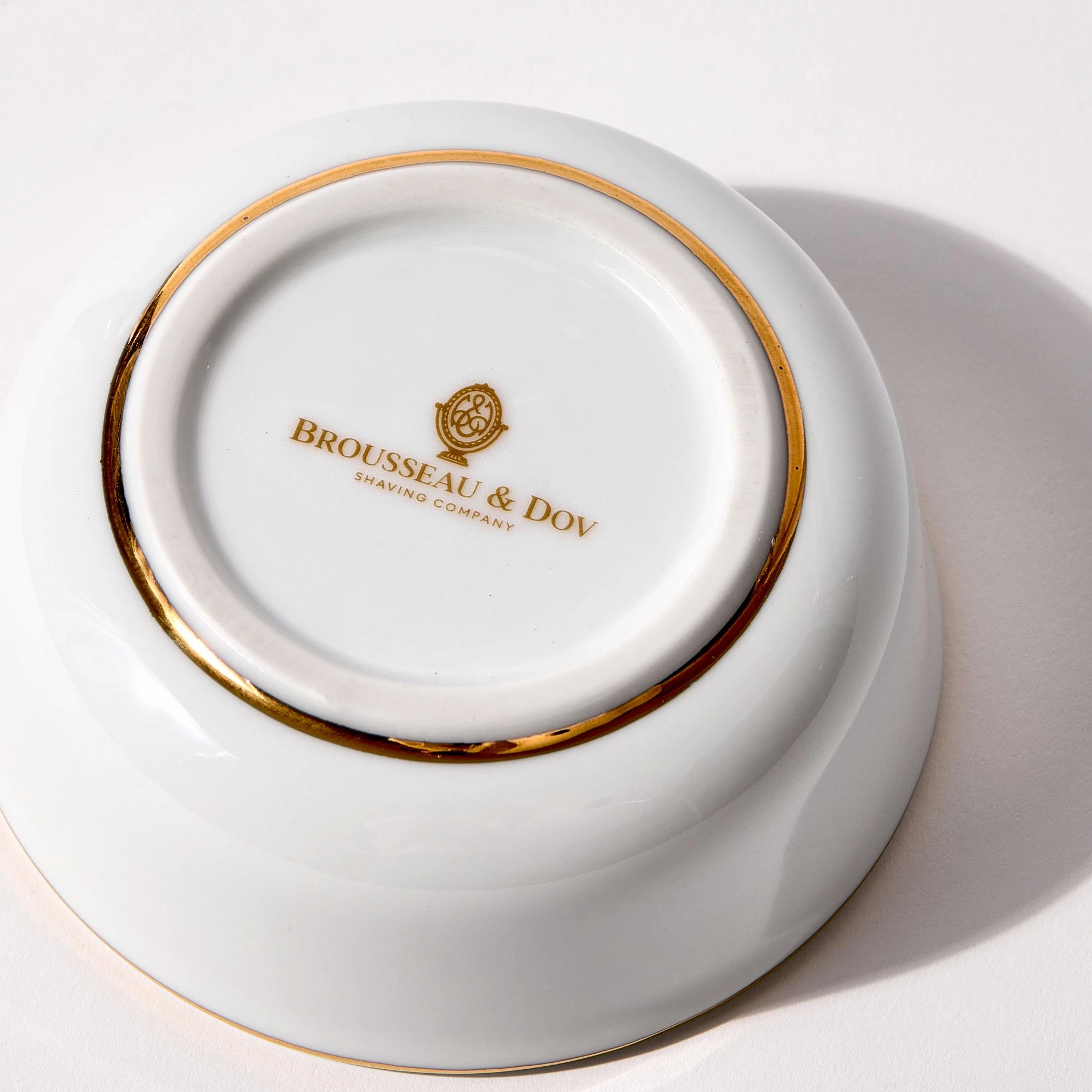
Most people never turn a shaving bowl over. They notice the size. The weight. How it feels in the hand. But the underside, the part that touches the counter, is rarely given much thought. In ceramics, that underside contains an important detail. It’s called the foot.
And in well-made pottery, it matters more than most people realize.
What a “Foot” Actually Is
In functional ceramics, the foot is the raised ring on the bottom of a vessel that lifts it slightly off the surface beneath it. It’s not decorative. It’s structural.
A proper foot does several things at once:
- It creates a clean, intentional boundary between the form and the surface.
- It creates a narrow contact point rather than a fully flat base.
- It defines how the vessel “sits” visually and physically.
In the pottery studio, the foot is often where a piece either feels finished or it doesn’t. In traditional wheel-thrown work, it’s trimmed after the clay has dried to leather-hard consistency and refined by hand. A careless foot can make a beautiful pot feel heavy or unfinished. A well-proportioned foot gives the form clarity and presence. Many people never consciously notice it, but they feel it.
Why Many Shaving Bowls Don’t Have One
If you look at the bottom of many modern ceramic shaving bowls, you’ll often find a flat base. That’s not inherently wrong. It’s efficient. Flat bottoms are easier to manufacture. They require less trimming, less refinement, and fewer production steps. For mass-produced ceramics, especially in categories where speed and cost are priorities, a flat base is common. But in traditional pottery, especially porcelain, a foot has long been considered part of finishing the work well.
When I began designing the Brousseau & Dov shaving bowl, including a true foot was never optional. Not because it’s visible. Not because it photographs well.
But because it determines how the bowl sits, both visually and physically.
The Relationship Between Form and Surface
A shaving bowl usually lives near a sink. Those surfaces are typically hard, glossy, often wet. The way a bowl meets that surface matters more than we think.
A properly formed foot creates a narrow, defined contact point. Instead of the entire base touching the counter, the bowl rests on a defined ring. That lift does three things:
- It prevents suction and sticking when surfaces are damp.
- It visually lightens the form.
- It gives the bowl a sense of intention rather than mass.
Without a foot, a bowl can feel planted. With one, it feels finished. In porcelain especially, this relationship is important. Porcelain has clarity and brightness. A foot allows light to move around the form more cleanly. It casts a shadow beneath the bowl, which subtly enhances its presence. These are not dramatic effects. They are subtle ones. But shaving is something done regularly. Over time, those details add up.
A Lesson from the Studio
When I first studied ceramics, I was taught that the foot is where the work is either finished well or not. That lesson stayed with me. You can throw a beautiful form. You can glaze it cleanly. But if the foot is thick, uneven, or poorly proportioned, the piece feels unfinished.
Trimming a foot requires attention. It takes time. It requires lifting the piece back onto the wheel after it has partially dried and shaping it carefully. There’s no shortcut to doing it properly.
That discipline carried into the design of the bowl. The foot had to be proportioned correctly to the wall thickness. It had to feel balanced in the hand. It had to sit confidently wherever it was set down. It had to complement the bowl’s geometry, not fight it. It’s a small detail, but small details are often where the integrity of a form is decided.
Tradition Reconsidered
19th century porcelain shaving mugs, the vessels that inspired Brousseau & Dov, almost always included defined feet. Those mugs were not designed as novelty items. They were daily tools, made by people who understood ceramics as craft.
But their purpose was different. Many were designed to hold soap and support the brush, not to serve as dedicated lather-building bowls in the way many wet shavers use them today.
In developing our bowl, the aim was not to reproduce the past, but to carry forward what was essential and refine it for modern technique.
Why This Matters to the Shave
You might ask: does a foot make better lather? Not directly. But it changes the way the bowl lives in your space. It changes how it sits when you set it down between passes. It changes how it feels when you rinse it. It changes how the porcelain catches the morning light. The bowl doesn’t just function. It exists. And when a vessel exists well, when its proportions are complete from top to bottom, the daily routine feels more considered and intentional. That’s the point.
Turning It Over
The next time you handle your shaving bowl, whether it’s ours or another, turn it over. Look at the underside. Is it finished? Is it intentional? Does it feel like someone thought about that surface? In ceramics, the hidden parts often tell you the most. And in shaving, as in pottery, the details you don’t notice immediately are often the ones that shape the experience over time.